
Professor Layton Beginner Guide: How the Series Plays
What a Layton game actually asks of you: numbered puzzles, picarats, hint coins and a town to explore. A spoiler-free primer before New World of Steam.
Quick answer: A Layton game is an adventure game where every obstacle is a puzzle. You walk through a town, tap people and objects, and a numbered puzzle opens; solving it advances the conversation or unlocks the path. Puzzles pay out picarats, wrong answers reduce the payout, and hint coins hidden in the scenery buy you hints. There is no combat, no timer and no fail state.
If that sounds gentle, it is — until a puzzle about water pouring or a liar who always tells the truth stops you for twenty minutes. The series' reputation for difficulty comes from variety, not reflexes.
This primer assumes you have never played one. The puzzle types page→ goes deeper on the categories; the hint coin page→ covers the economy.
Read the puzzle text twice before touching anything. Most "impossible" Layton puzzles are word problems with a unit or a direction hidden in the phrasing.
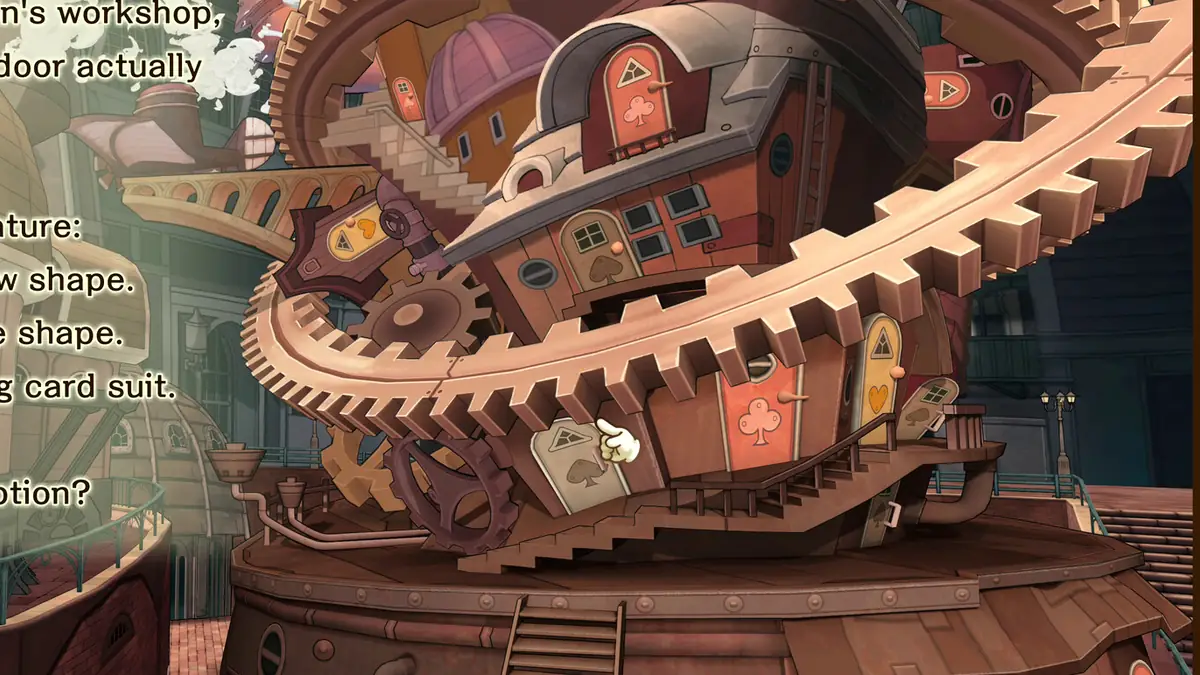
The core loop
Every entry, including the new one, follows the same rhythm:
- Explore. Move between screens, tap suspicious objects, talk to everyone.
- Trigger a puzzle. Conversations, locked doors and curious objects all open puzzle screens.
- Solve it. Read the prompt, use the touchscreen or cursor to arrange your answer, then submit.
- Get paid in picarats. The score drops with each wrong attempt, so a clean first answer is worth more.
- Move on. The story resumes, and the next obstacle appears.
Nothing is missable in a punitive sense — you can usually revisit a puzzle, and the story never blocks permanently. The score is the only thing you lose.
Picarats, and why they matter
Picarats are the series' score. A typical puzzle is worth 20 to 50; the hardest are worth more. Each wrong submission reduces the value, and after a few mistakes the puzzle is worth very little.
In older games, your total unlocks bonus content at the end — concept art, music, extra puzzles. Level-5 has not detailed the rewards in New World of Steam, so treat picarats as a completionist metric until the game explains otherwise.
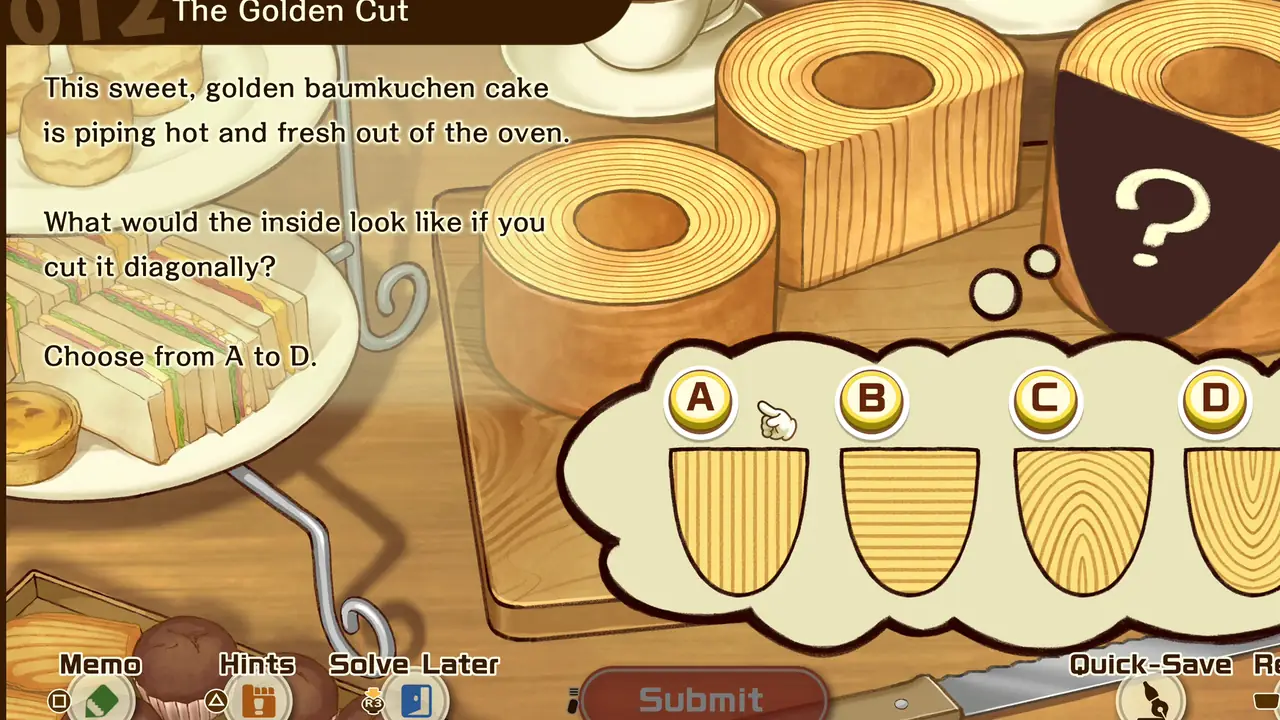
Hint coins
Hint coins are hidden in the environment: in barrels, under benches, behind signs, inside flowers. You spend them on up to three hints per puzzle, and each hint costs more than the last. The counter sits in the corner of the puzzle screen in the new game, which is visible in official screenshots.
They carry over between puzzles and cannot be bought with real money as far as Level-5 has said. Hoarding them is the single most common beginner mistake — see the hint coin guide→ for where the series usually hides them.
What is different in the new game
Level-5 has announced four changes to the formula:
- The most puzzles in series history, according to the official Game Overview page.
- Daily Puzzles: one new puzzle every day for over a year after launch.
- Town development: certain puzzles upgrade Steam Bison's facilities, and the town changes visually as you progress.
- Shared solving: the game is designed so one player can work alone or a group can solve on a big screen together.
The new mechanics page→ breaks each of these down. None of them replaces the core loop above; they extend it.
Three minigames, one per district
Like most Layton games, this entry buries three optional minigames in the world:
| Minigame | What you do |
|---|---|
| Sir Steeps's Café Stand | Take drink orders from overheard conversation and recreate them |
| Falcon and the Curious Egg | Transform items through Reversal, Evolution and Fusion modes |
| Go! Robo-Duck! Go! | Program a duck robot through an obstacle course |
They are optional, and they are where the series usually hides its strangest puzzles.
How long these games run
The DS entries take 15 to 20 hours for the story and 25 or more with optional puzzles. The 3DS games are longer. Level-5 has not published a length for the new game, and the daily puzzle stream means "finished" is a matter of definition.
What to play first
If you want preparation rather than a full catch-up, play Unwound Future — the direct setup for this story — and read the series timeline→ for the rest. If you want a gentle introduction to the mechanics, Curious Village is still the simplest entry.
FAQ
Do I need to be good at maths? No. A handful of puzzles are arithmetic, but most are logic, spatial reasoning or careful reading.
Can I skip a puzzle? No. Story puzzles have to be solved, and the DS and 3DS entries have no skip option. Hints are the only assistance the series offers.
Is there a time limit? No. Nothing in the series is timed.
Are puzzles randomised? Story puzzles are fixed. Daily Puzzles are new content, and Level-5 has not said whether they repeat across players.
Sources
Official source: Official game site ↗ · Steam page ↗ · Nintendo product page ↗